

Converting Images into Data… The Different Methods of Machine Vision
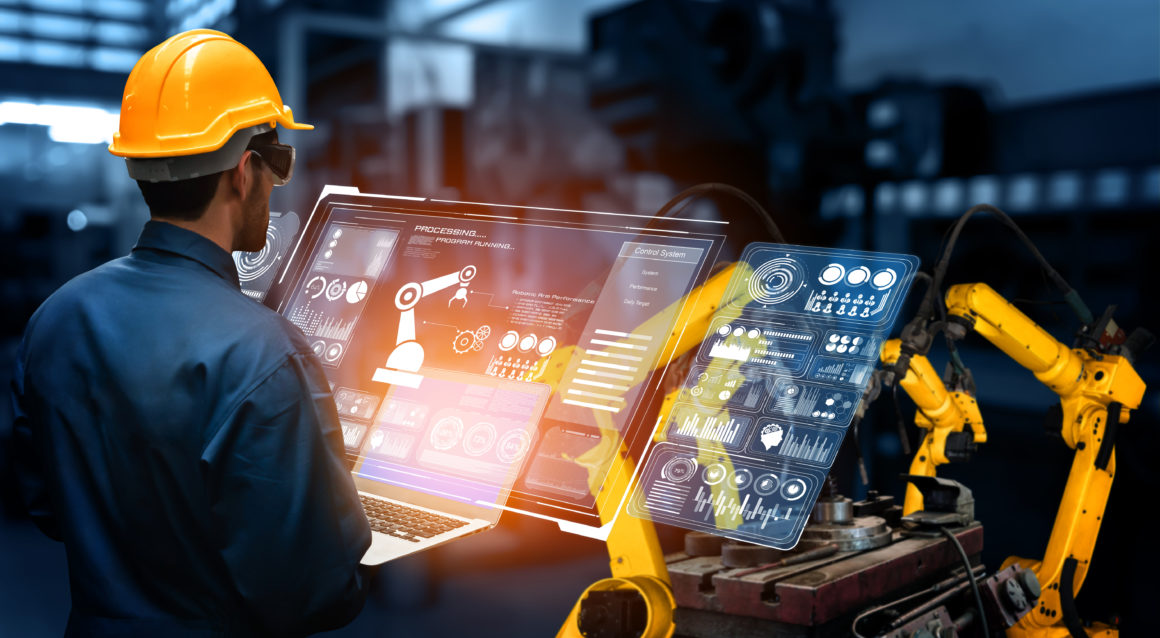
As part of the industry’s digital transformation, data collection is a key factor.
This applies regardless of the industry (food processing, automotive, plastics, textiles, metalworking, pharmaceuticals, biology, electronics, robotics, etc.).
When it comes to tracking, identifying, detecting, measuring, and classifying—in real time—items of all kinds, sizes, shapes, materials, and colors, moving through environments ranging from the simplest to the most complex and often at high speeds… the use of image analysis becomes essential.
But which process should you choose? Which method is best for which application?
The Basic Principle of Machine Vision
To analyze an image, you must first capture it: you must therefore see it and record it.
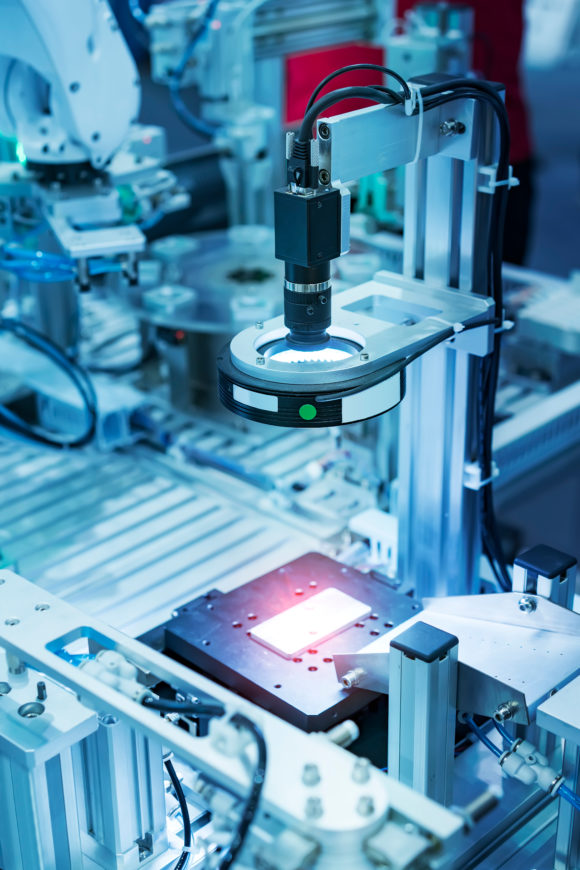
In an industrial setting, this involves a [camera + lens] system installed on the production line, on the machine tool, or within the production environment.
In addition, targeted lighting is required, specifically designed based on the production environment and the type of objects “captured” on video.
For example: a shiny or transparent object poses a risk of light artifacts that must be resolved to ensure accurate reading. Similarly, a dark work area will need to be compensated for.
Track and measure your images using conventional machine vision methods
For any vision project aimed at data processing, the first instinct should be to prioritize simplicity. After all, why make things complicated when you can keep them simple!
So-called “conventional” methods provide a reliable and effective solution for many applications. They require little computation time and are well-suited to environments where high-contrast imaging is feasible. They therefore offer significant added value, particularly for quality control and manufacturing processes.
That is why these are the methods we will consider first during the feasibility study.
Without writing any code, our AX VISION software suite enables the collection of data—such as size, diameter, thickness, surface appearance, circumference, and more—with a very high degree of precision, down to a few microns per pixel.
Thanks to custom-tailored settings for filtering and tracking operations, along with our detection algorithms, extracting information from a static or dynamic image (i.e., from a stationary or moving object) is both simple and powerful.
Data processing is performed at very high speeds, as in this example of detecting microbubbles trapped in resin.
No matter how simple or complex the environment, accuracy is guaranteed.
As a result, the fields of application are numerous… if not infinite.No matter how simple or complex the environment, precision is guaranteed.
Thus, the range of applications is vast—even infinite.
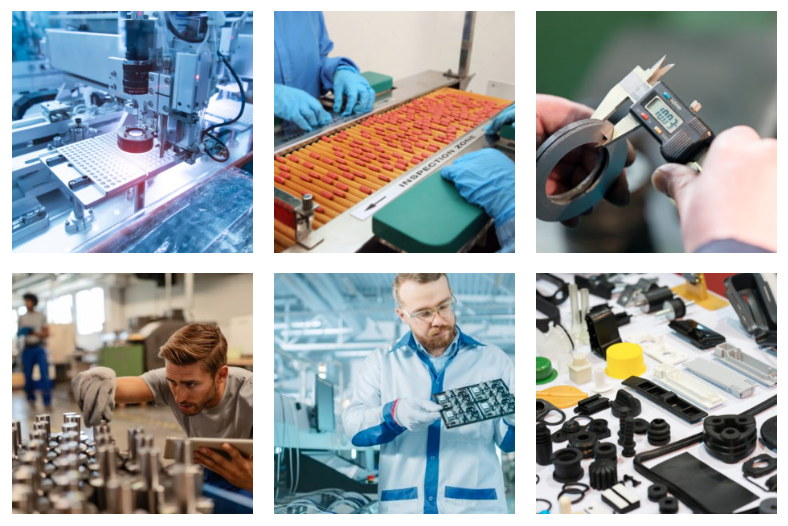
The conventional method is particularly well-suited for rigorous quality control of centimeter-sized parts requiring micrometer-level precision. Examples include the manufacturing industry, automotive suppliers, the plastics industry, and the pharmaceutical industry.
We can also imagine applications dedicated to the environment, such as tracking a bird species, for example, by measuring its size and wingspan and calculating its speed and/or flight path.
Adding Depth to Images
Conventional methods are available in 2D and/or 3D formats.
While 2D meets the needs of most machine vision applications, 3D is designed for three-dimensional measurements (width x height x depth), typically using a stereoscopic camera or a time-of-flight (TOF) camera.
Inspired by human vision (which allows us to see and understand three-dimensional objects), stereovision simultaneously captures two images of the same object from two different viewing angles. It is the fusion of these images and the alignment of the points that create the sense of depth.
3D vision is a major asset in the continuous improvement of tomorrow’s industries, particularly for the integration of autonomous or collaborative robots. It is this technology that gives robots their “sight” and guides them during picking operations (removing items from bulk piles or retrieving them from bins or containers), as well as during automatic depalletizing and complex assembly operations (gluing, welding, etc.).
Compliance OK/KO: Making Sense of the Measurement
Once we have obtained the correct image and extracted the relevant data required by the specifications, we still need to ensure compliance.
It’s not just about taking a measurement; it’s about making sense of it.
In short, it involves prioritizing and organizing the data to create a “bill of materials.”
This involves configuring a decision tree-type application programming interface (API) to determine whether an object, for example, has or does not have the correct size, color, surface area, etc.
OK: it is compliant / KO: it is not compliant.
Let’s take a paper clip as an example.
This is what will drive the rest of the industrial process. Non-conforming items are discarded; items that pass the quality checks continue down the production line; the machine tool moves on to the next phase, and so on…
Why stop there? Data is valuable. Why not make use of it…
Traceability: A Key Factor in Continuous Improvement
Collecting this data also makes it possible to track the inspections performed on products and to conduct a measurable and quantifiable analysis of their compliance:
- Why they were rejected
- Display of overall rejection rate curves and/or curves by defect type
- Calculation of defect percentages
- How many products were rejected
… all of which is useful data that can be quickly exported to create a report offering undeniable added value for production management and continuous improvement.
This traceability tool is an integral part of AX VISION: every decision is recorded and can be used for industrial vision-based traceability.
And what about AI in all of this?

AI is also a method of analysis. Just like conventional methods, AI enables data extraction and takes over when conventional methods are not suited to complex contexts.
This technology requires human-supervised learning.
To achieve this, two types of expertise (whether in-house or outsourced) are necessary: the know-how of a domain expert and the expertise of an AI database specialist.
Consider the example of a very young child who is shown a picture book of animals. The child will eventually come to understand that one image represents a lion and another a cat… Over time, the child will even come to understand that the two animals belong to the same family. Thus, the first time they see a photo of a leopard, they will intuitively deduce that the animal also belongs to the same family as the lion and the cat.
APREX Solutions offers AI vision solutions with end-to-end support (development, training, supervision, implementation, training, etc.).
Machine Vision: Key Takeaways
From simple data collection to complex data analysis, there isn’t just one way to “see”—there are many!
Have a need or a project? Let’s talk about it!
APREX Solutions is here to help you define your project.
Article précédent
Fibre optique et contrôle qualité à haute vitesse
Article suivant
Industrial vision and fundamental research, the same battle