
Machine Vision: AI and Parametric Algorithms for Quality Control

Custom Industrial Computer Vision: What determines the choice of technology for each camera-based inspection project
The performance of an industrial computer vision inspection project does not depend solely on the power of the algorithms. It depends primarily on the right combination of technologies.
Detection, classification, and localization of defects or anomalies; event detection; dimensional measurement; appearance inspection; character and code recognition: each application has its own constraints. The nature of the defects or the observed phenomenon, expected accuracy and resolution, compliance thresholds, acquisition conditions on the production line or in the laboratory… These parameters are defined in the specifications: they determine the methods to be used to design a customized solution for each computer vision project.
APREX draws on more than 15 years of R&D in parametric algorithms and artificial intelligence. Our AX software suite—including AX VISION and AX AI—enables the design and deployment of custom image processing and optical measurement applications.
Supervised AI, unsupervised AI, or parametric method: which image analysis method for which type of detection?
In both machine vision and computer vision applied to R&D, three families of algorithms are used to analyze images. Unsupervised AI learns solely from reference images and flags any deviations. Supervised AI recognizes and identifies what it has been trained on. The parametric method measures and compares against numerical thresholds. The right choice depends on a simple question: should we flag, classify, or measure? Often, the answer involves a combination of several methods.
1/ Unsupervised AI anomaly detection method
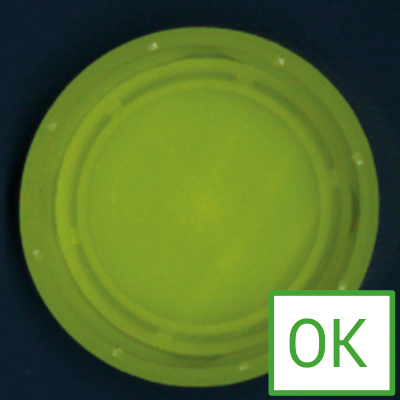
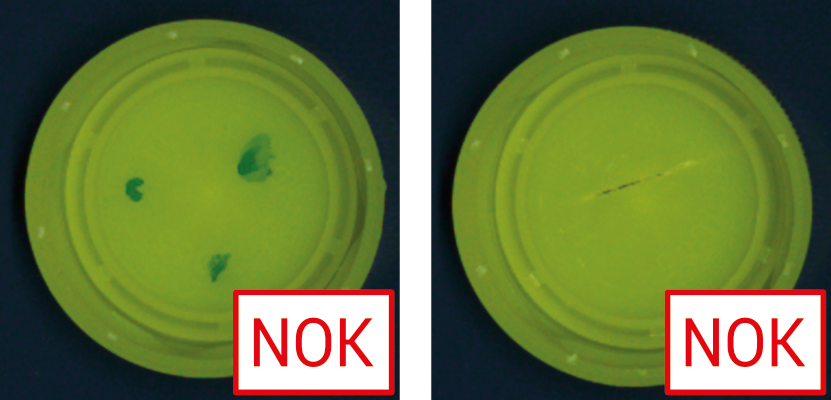
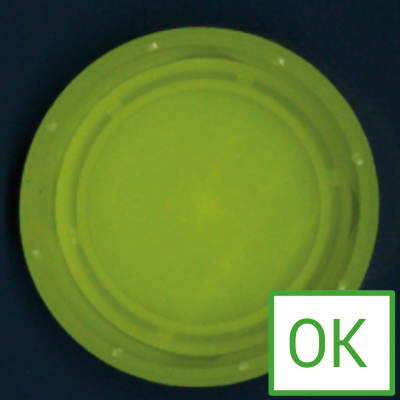
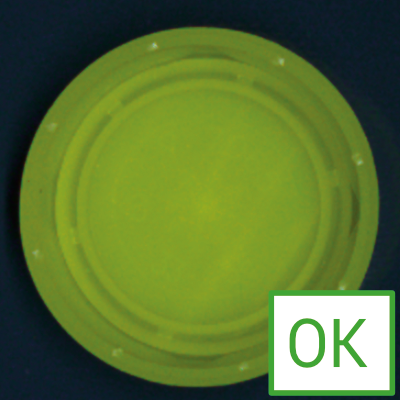
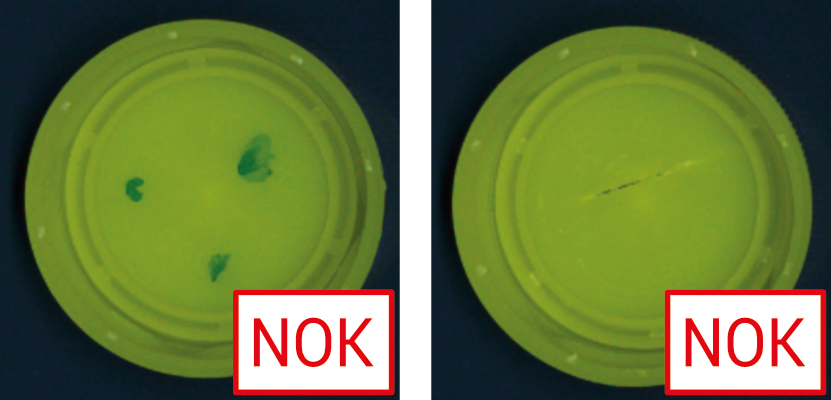
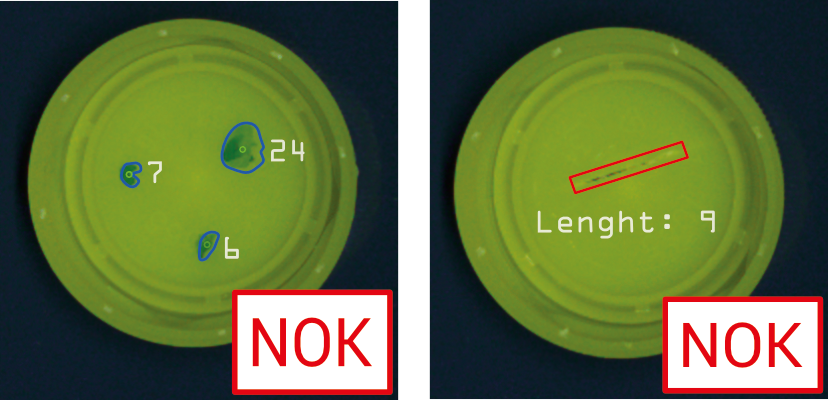
- Principle: The model is trained exclusively on conforming images. It learns to recognize a “good” part (in this case, a cap). Any difference from the training images is flagged as an anomaly.
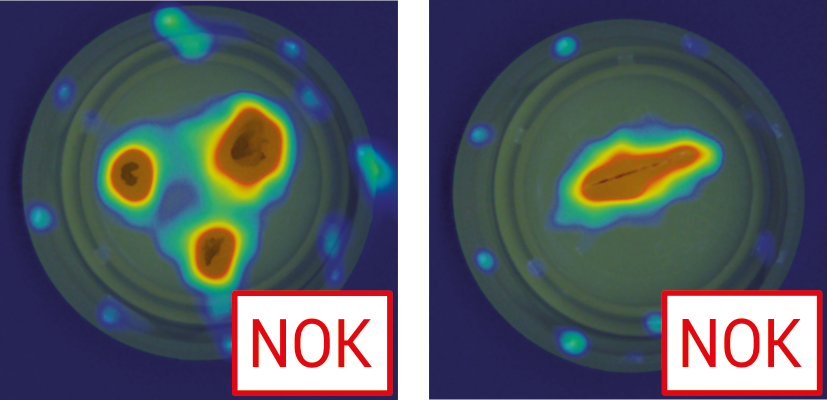
- What this method enables: locating, counting, and approximately measuring an anomaly.
- Limitation: It does not classify the anomaly (it does not recognize it precisely or name it).
- Required data: Conforming parts for training and a few non-conforming samples to validate the application’s effectiveness.
- When to use it: For inspections where it is not necessary to name the anomaly. Best suited for products with little variation, in a very stable environment.
- AX Software: AX AI for annotating databases and training AI models + AX VISION for creating the computer vision application and deploying it into production.
2/ Supervised AI defect detection: locating and classifying each type of defect
- Principle: The model is trained using conforming and non-conforming images. Through database labeling, it learns to recognize and identify specific characteristics. Only the defects included in the training are flagged.
- What this method enables: detecting, locating, and classifying the desired features (shape, position, etc.) with high precision and reliability; precisely outlining defects using a bounding box or mask; configuring the compliance threshold according to inspection requirements.
- Limitation: It does not detect defects it has not been trained to recognize.
- Required data: a batch of samples containing all the defects to be recognized in production.
- When to use it: whenever a specific defect needs to be detected with high precision.
- AX software: training with AX AI, deployment in production with AX VISION.
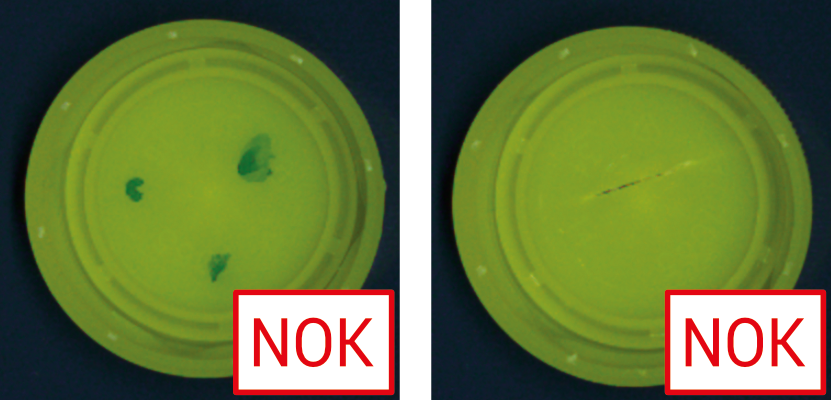
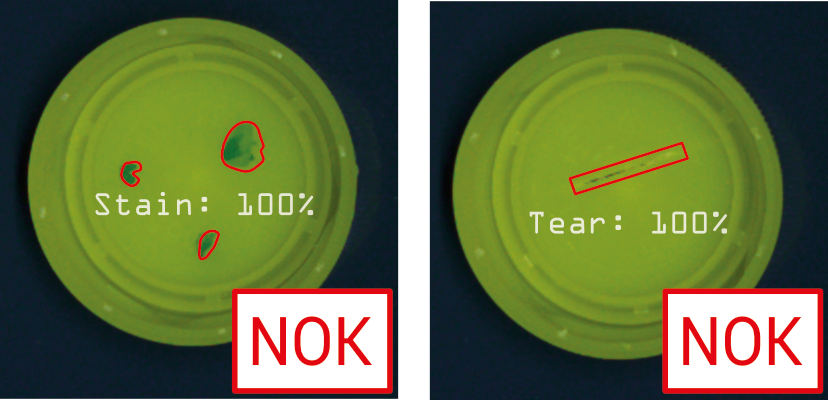
3/ Defect detection Using a parametric method: measure and compare against tolerances
- Principle: Algorithms configured and calibrated according to a compliance threshold defined in the specifications. Only measurements outside the tolerance range are flagged as NOK.
- What this method enables: precise dimensional (microns, mm, m) and colorimetric (LAB, HSV, RGB) measurements in absolute values; multiple inspections, even at very high throughput rates.
- Limitation: It does not classify defects and does not handle cases that have not been configured.
- Required data: A batch of non-conforming samples, with the value of each defect.
- When to use it: Preferred for dimensional and colorimetric measurements.
- AX software: Configuration and deployment in production with AX VISION.
Comparison Table of Image Analysis Methods: Unsupervised AI, Supervised AI, and Parametric Methods
Comparison of Three Image Analysis Methods for Detecting Defects and Anomalies
|
Criterion |
Unsupervised AI |
Supervised AI |
Parametric Method |
|---|---|---|---|
|
Learn from |
Compliant images only | Labeled compliant and non-compliant images | specification parameters and thresholds |
|
What is flagged |
Any deviation from compliant images | Only induced defects | Only measurements outside tolerance |
|
Names the defect |
No | Yes | No |
|
Detects an unexpected defect |
Yes | No | No |
|
Accuracy |
Approximate location and sizing | Precise cropping (bounding box or mask) | Measurement in absolute values (microns to meters; LAB, HSV, RGB) |
|
Samples required |
Conforming parts + a few non-conforming parts for validation | Batch covering all defects to be recognized | Non-conforming parts with the value of each defect |
|
Best suit for |
Products with little variation, stable environment, defects to be flagged without naming them |
Defined defects to be detected with high precision | Dimensional and colorimetric measurements, very high throughput |
| With wich AX Software | AX VISION: Training and Semi-Automated Deployment / AX AI: Model Training |
AX AI: Data Annotation and Model Training / AX VISION: Production Deployment in a Computer Vision Application |
AX VISION |