

Mutual interactions between plasma filaments in a
tokamak evidenced by fast imaging and machine learning
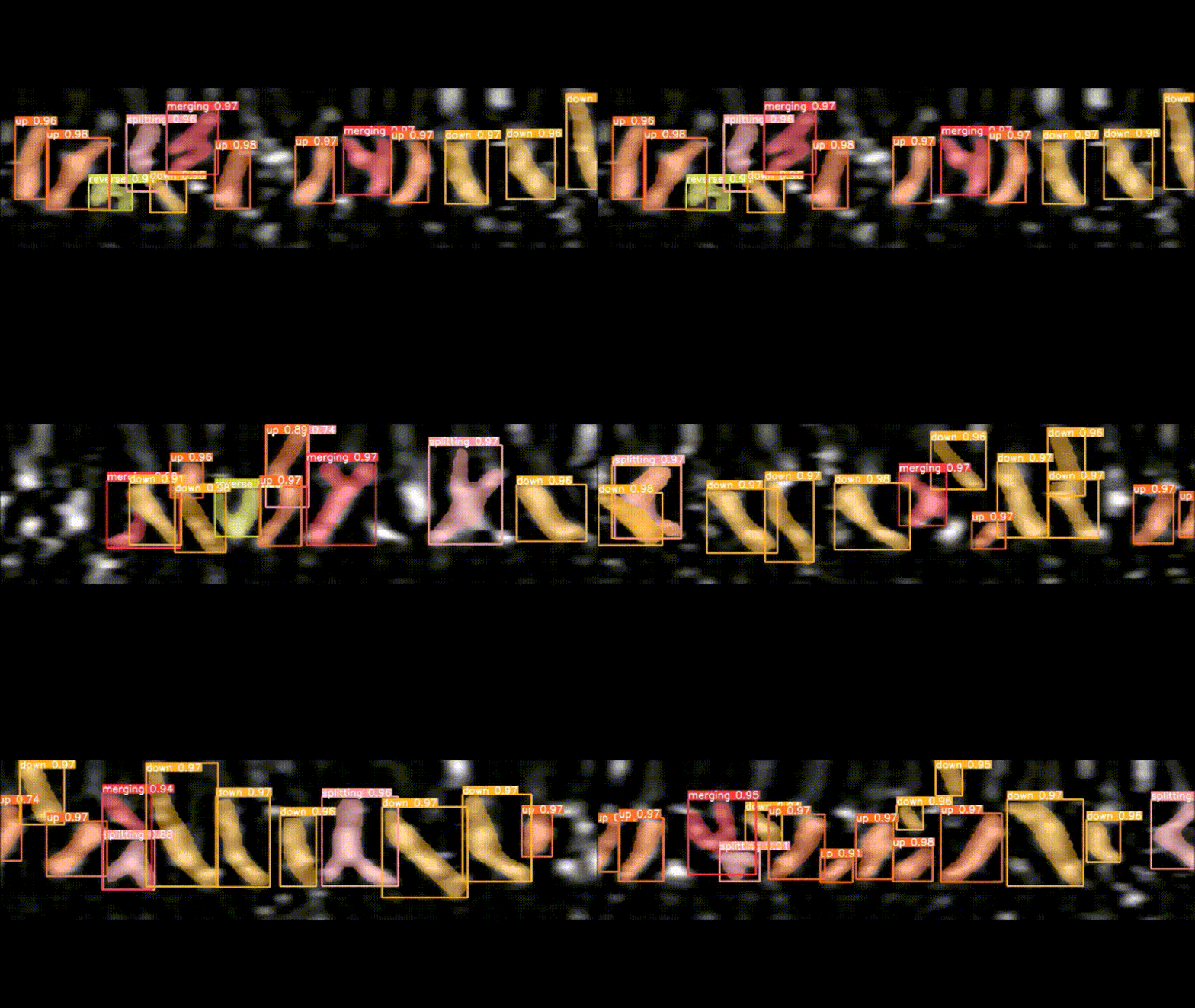
Development of a supervised AI application to categorize the behavior of plasma filaments
Drawing on image analysis algorithms developed through research in nuclear fusion, APREX Solutions is also a partner in this research. Our R&D team has just co-authored a research paper published in the journal Physical Review E (link). The topic? The study of nonlinear interactions between plasma filaments (called “blobs”) in a magnetic fusion reactor.
In a nuclear fusion plasma, these filaments are responsible for the transport of heat and particles across magnetic field lines, reducing the reactor’s efficiency.To clarify: any reduction in plasma confinement will reduce the reactor’s performance. These filaments result from a self-organizing phenomenon of turbulence that causes microstructures to coalesce, leading to the formation of larger structures. This results in a loss of material at the reactor core.
In other fields, it is the same type of phenomenon that is responsible for the formation of cyclones (you know, the famous flutter of a butterfly’s wings that triggers a storm a few days later thousands of miles away…). This also applies to economics, where self-organization is the result of complex and often irrational interactions among market participants, leading to the emergence of structures such as speculative bubbles, without direct external intervention. One last example to wrap things up? Leopard spots and zebra stripes. These complex patterns emerge spontaneously from local interactions between skin cells and chemical signaling molecules during embryonic development. The patterns are generated by self-organizing processes such as reaction-diffusion, in which chemicals react with one another and diffuse through the tissue, creating regular or irregular patterns depending on local conditions. These coat patterns are therefore not dictated by a detailed genetic blueprint, but rather emerge from the complex dynamics of molecular and cellular interactions.
In a nuclear fusion reactor, mutual interactions between plasma filaments are not a new discovery, as these interactions are predicted by models and indirect observations have already been reported. The work presented in the journal *Physical Review E* is, however, the first to directly demonstrate this phenomenon and to characterize it based on a statistically significant volume of experimental data.
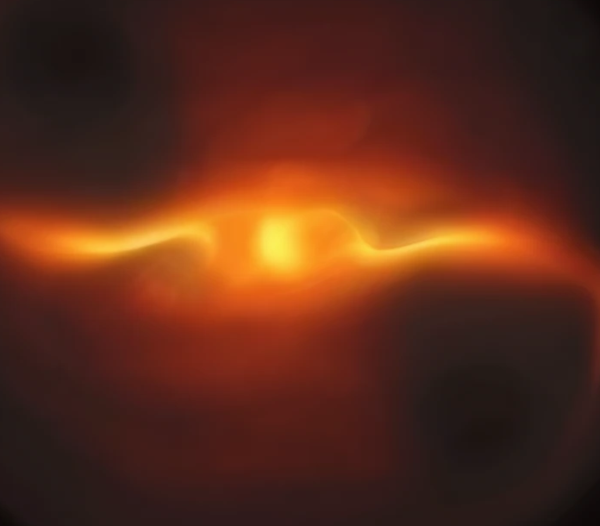
(AI-generated image)
A tailored solution for exceptional imaging scenarios
To achieve this, our doctoral student Sarah Chouchène (1) developed a new analysis method based on artificial intelligence. This method was applied to high-speed imaging data from the COMPASS tokamak, located at the IPP in Prague (Czech Republic): 1 million images per second, noisy and blurry (conditions inherent to the environment under study). The new analytical method was validated by comparing the results obtained with those provided by the AX R&D software, which uses a different approach. The results presented show that approximately 20% of the plasma filaments interact strongly with one another, thereby validating other theoretical studies for the first time.And, to top it all off: just as self-organization phenomena occur in a wide variety of systems, the new analytical method we have developed can be applied to many fields of study, far beyond nuclear fusion (2).
(1) This thesis was co-funded by APREX Solutions, the Grand Est region, and the CNRS, under the joint supervision of Frédéric Brochard (Institut Jean Lamour / APREX Solutions) and Mikael Desécures (APREX Solutions).
(2) This is why we chose the journal Physical Review E, which covers research on nonlinear and statistical phenomena in physics and biology.
Article précédent
Sécurisation d'un processus de maintenance de très haute exigence grâce à l'IA pour EDF : La Story
Article suivant
APREX Solutions is accelerating its growth in machine vision with a €2.1 million funding round