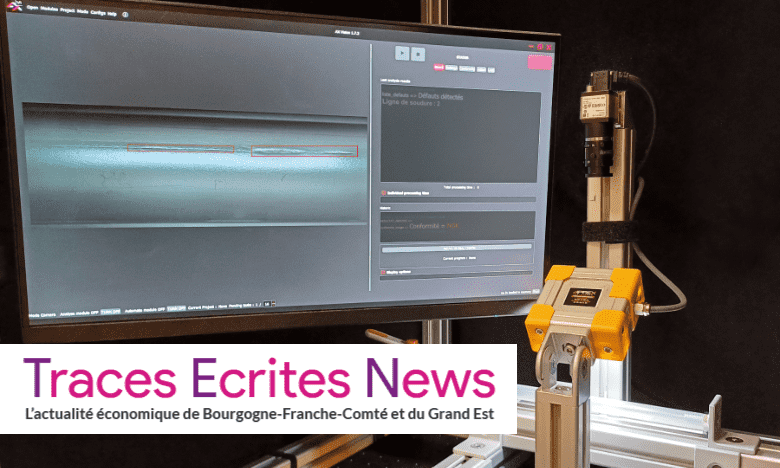

An AI-powered monitoring solution for the maintenance of SNCF Voyageurs rolling stock.
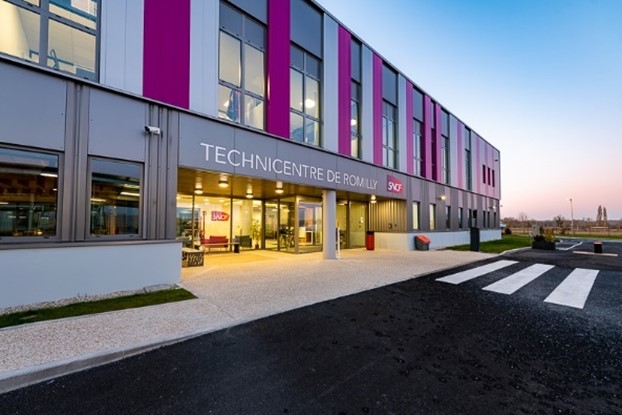
© SNCF
APREX Solutions, an expert in machine vision, is equipping SNCF Voyageurs’ maintenance departments with an AI-powered vision inspection system. Its goal: to ensure the quality of the final inspection of parts repaired at SNCF Voyageurs’ industrial sites and intended for use in rolling stock.
1/ Background
Contact brushes are mechanical components mounted beneath the trains that send a signal to the driver’s cab before the train approaches sensitive areas (level crossings, station entrances, etc.); the driver must acknowledge this signal to confirm that they have taken it into account (by braking, slowing down, etc.).
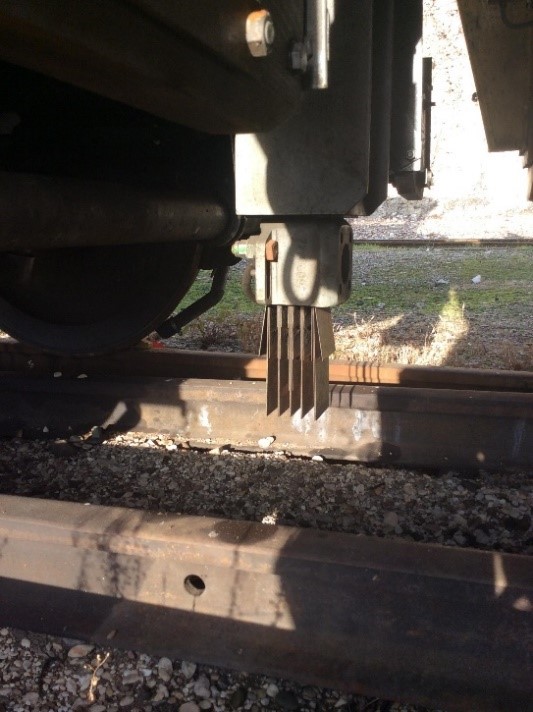
https://www.cheminots.net/topic/41104-les-crocodiles/
The mechanism is simple: the brush, positioned under the train between the wheels, makes contact with an elongated metal component installed parallel to the rails. This component bears the exotic name “crocodile” because its undulating shape resembles the back of the animal swimming on the water’s surface. Upon contact with the brush, audible and visual signals are then emitted in the driver’s cab. These are warnings that the driver must acknowledge.
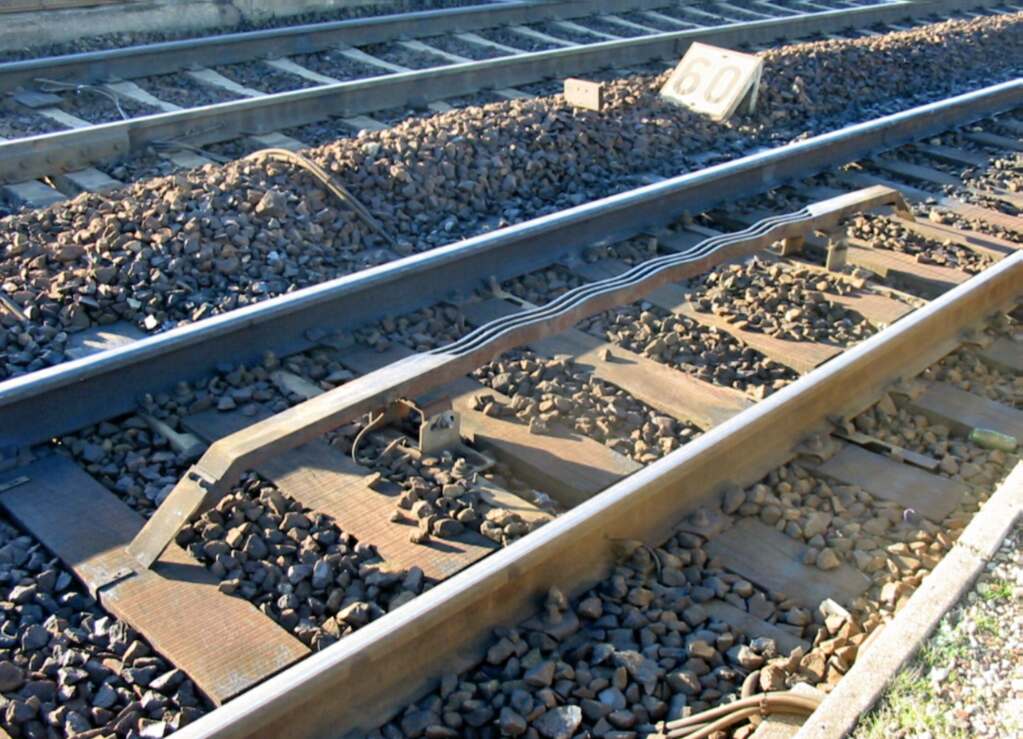
https://commons.wikimedia.org/w/index.php?curid=519699
These brushes, located underneath the train, are subjected to intense impact from ballast and other objects on the tracks traveling at high speeds. The constant steel-on-steel friction caused by contact with the rail head leads to deformation and wear of the brush. They are replaced regularly (approximately every 2–3 months) depending on train traffic.
2/ Needs and Challenges of Automated Testing
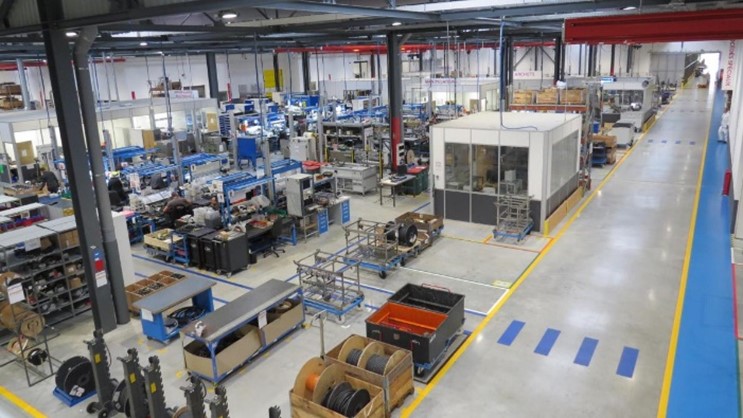
At the Industrial Technicentre in Romilly-sur-Seine (10), nearly 15,000 brushes are repaired each year.
© SNCF
They are assembled in the workshop by maintenance technicians and inspected by hand and visually by a quality control technician.
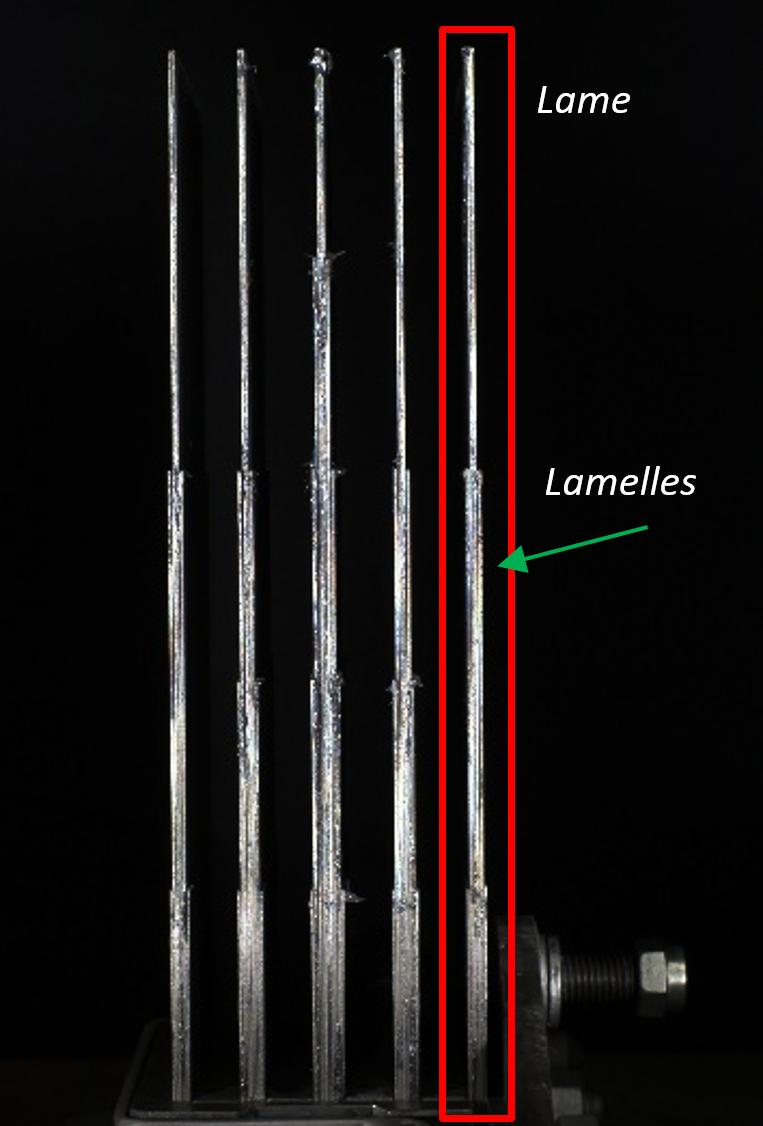
A brush measures approximately 20 cm high by 8 cm wide. It consists of a stack of steel blades of various sizes and shapes, assembled in a specific configuration and order according to the product specifications. Adherence to this assembly is essential to ensure the device’s compliance and safety.
© APREX Solutions
This audit is extremely demanding and complex. It involves:
- Count the steel blades, which are divided into 5 bundles of blades tightly packed together, to ensure that none are missing and that there are no duplicates. Check that the blades and tabs are correctly arranged and sequenced according to the reference diagram,
- Check for the presence or absence of fasteners such as screws and bolts to ensure that each part is positioned correctly,
- Verify the presence of an identification label,
- Ensure that the warranty sticker is properly filled out.
Carefully inspecting features measuring approximately 4 mm on parts up to 30 cm in size requires sustained attention and leaves no room for error. In fact, every day, an operator checks 9 inspection points on each of the 75 brushes produced: a repetitive task that is particularly taxing on the eyes.
The implementation of an automated inspection solution (completed in June 2023) at the Romilly Industrial Technicentre addresses this dual objective:
- Support and assist operators
- Improve the reliability of monitoring to make it even more objective
3/ The proposed solution: AI-powered smart monitoring
APREX Solutions successfully met this need by providing a custom camera-based inspection application for automated brush inspection.
Specializing in the design and development of machine vision applications since 2017, the company, based in the Grand Est region, has developed an application equipped with artificial intelligence. Its tasks: locating, recognizing, and counting the various blades and slats, and verifying the presence of fasteners and traceability labels.
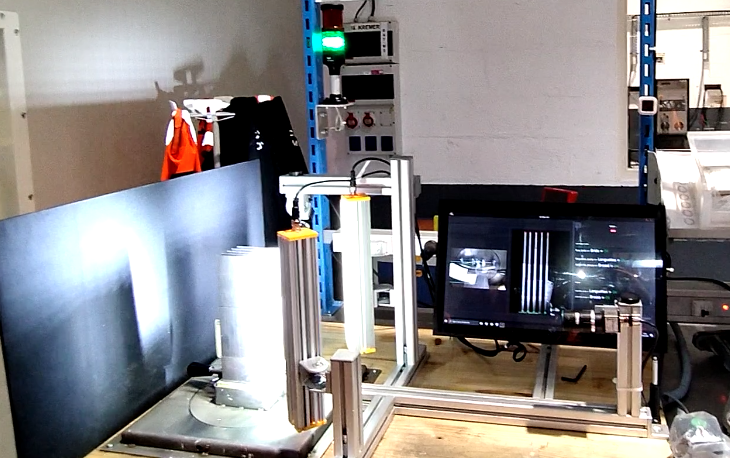
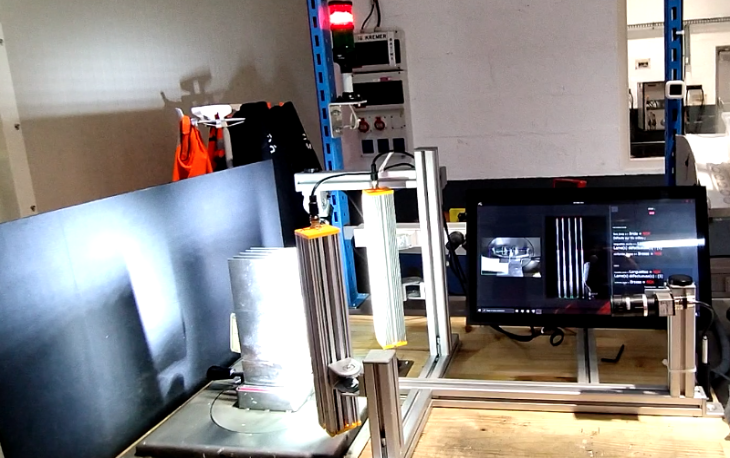
The AI model trained in this way recognizes in real time whether a brush is compliant or not. Integrated into the quality controller’s workstation as part of a vision system (cameras, lighting, and an industrial controller capable of processing large amounts of data), the properly configured application effectively assists the operator in determining whether parts are OK or NOK.
|
|
|
| Inspection station equipped with a vision system - OK/KO | |
4/ Benefits of the solution and cross-functional feedback
The APREX solution offers four key advantages:
- Robustness and reliability of the control:
The technology used minimizes “false negatives” by learning from possible cases.
- Reduced inspection times:
With an inspection time of about 2 seconds per brush, the system ensures that product is dispensed without affecting throughput time. As a result, the Romilly facility can now produce 105 to 140 brushes per day, compared to 70 brushes per day currently.
- Reducing physical strain:
This relieves the controller of the intense concentration he had to maintain at all times.
- Enhance security:
By optimizing the inspection and traceability of inspected parts, APREX’s solution improves the reliability of rolling stock and reduces false alarms.
The proof: no technical non-conformities have been detected by maintenance centers using brushes since this solution was implemented at the technical center in June 2023.
Testimonials
Jean-Jacques ASSADOURIAN
Industrial Quality Manager, SNCF Equipment Division
“At the Romilly-sur-Seine Industrial Technicentre, we repair parts used in our trains. A production volume of 15,000 units per year for a single part number is a significant volume for us.
The repetitive nature of the task can lead to human error, which is why we decided to take the plunge and adopt this technology.
It is integrated into our production process during our final release inspection phase.”
Régis GODON
Plant Manager, Romilly Industrial Technical Center
“For large production runs of parts, such as the contact brushes for our rail vehicles, AI allows us to ensure the reliability of our inspections and guarantee product compliance.
This is essential: the contact brush is mounted under the train and ensures the transmission of signals to the cab on conventional lines.
With AI, operators and machines work in tandem. Operators perform the disassembly, inspection, and reassembly of the contact brush. AI validates the conformity of the finished product.
Humans perform technical tasks, and technology validates the work of humans. By ensuring the quality of our parts, this duality contributes to the safety of railway operations.”
Romilly-sur-Seine Industrial Technical Center:
- Center of excellence for the overhaul and maintenance of repairable equipment components (pantographs, manipulators, gearboxes and transmissions, circuit breakers, batteries, electrical equipment, and electronic components). The site has been offering its expertise for over 130 years while meeting the most modern industrial standards and processes. 300 employees and over 60,000 parts are repaired annually.
- Dismantling Site: Dismantling of Decommissioned Railway Rolling Stock and a CMR (Decommissioned Rolling Stock Unit) team.
https://www.linkedin.com/company/technicentre-industriel-de-romilly-sncf/?originalSubdomain=fr